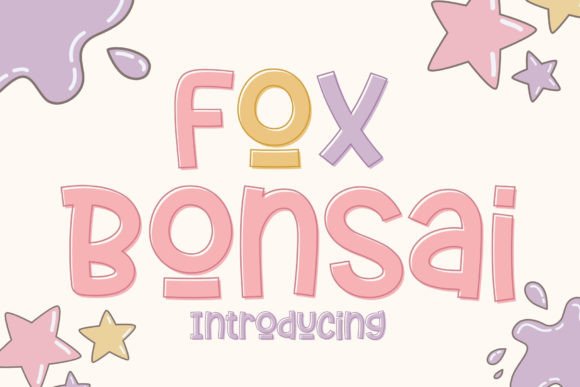
Fox Bonsai: A Playful Display Font for Small Business Branding
Last week, I found myself sitting at my kitchen table with a fresh batch of product labels spread out in front of me. I had just finished testing a new small-batch candle line, and the time had come to give it a proper identity. The scent profiles were warm and playful, but the typography I had been using felt too serious, too corporate. It did not match the friendly, handmade energy I wanted my customers to feel. That is when I decided to try a display font I had been eyeing for a while: Fox Bonsai. I printed a quick test label, placed it on a candle jar, and stepped back. The difference was immediate. The font brought a lightness and charm that made the product feel approachable, like something you would want to gift to a friend. That moment reminded me how much a single typeface can shift the entire personality of a brand.
What Makes Fox Bonsai Stand Out as a Display Font
Fox Bonsai is a display font with a distinctly playful and friendly character. It does not try to blend in or be neutral. Instead, it leans into a warm, whimsical style that feels both cheerful and deliberate. The letterforms have a rounded, soft quality that makes them feel inviting, almost like a hand-drawn note from someone who genuinely enjoys what they do. This is not a font that works well for long paragraphs of body text, and that is perfectly fine. Its strength lies in short, impactful uses where personality matters most. Think product names, taglines, menu headers, logo words, and social media titles. When you need a font that feels like a smile, Fox Bonsai delivers.
What I appreciate about this typeface is that it does not sacrifice readability for style. Even with its playful curves and decorative touches, each letter remains clear and easy to recognize. That is a tricky balance to achieve, and it is one of the reasons I consider this a premium font for small business branding. It gives you the freedom to be creative without confusing your audience. Whether you are designing a label for a kids' skincare line, a tag for a handmade boutique, or a banner for an online shop, Fox Bonsai brings a consistent, cheerful mood that feels cohesive across different materials.
Real Business Uses for Fox Bonsai
I have been testing Fox Bonsai on several real business materials, and the results have been consistently positive. One of the first things I tried was a set of product labels for a small skincare line. The font sat beautifully at the top of each jar, giving the product a friendly, approachable feel without looking childish. It worked especially well for short product names like "Dream Serum" or "Honey Glow," where the playful letterforms could shine. I also used it on a thank-you card that accompanied each order, and the response from customers was noticeably warmer. Several people mentioned that the card felt personal and thoughtful, which is exactly the kind of brand perception you want to build.
For a bakery client who wanted to refresh their packaging, Fox Bonsai became the anchor for their entire identity. We used it on the front of pastry boxes, on ingredient labels, and even on a small sticker that sealed each bag. The font's friendly tone matched the bakery's homemade, small-batch approach perfectly. It did not feel overly polished or corporate, which would have been a mismatch. Instead, it felt authentic and warm, exactly like the baked goods inside. The owner told me that customers started commenting on how cute the packaging looked, and a few even said they kept the boxes to store things at home. That is the kind of brand loyalty that starts with a thoughtful design choice.
I have also used Fox Bonsai for social media graphics, specifically for Instagram posts announcing new products and seasonal promotions. The font works well in headlines and overlay text, especially when paired with a clean background or a soft photo. It grabs attention without screaming for it. On a mobile screen, the letterforms remain legible and charming, which is critical when you are trying to stop a scroll. For small business owners who manage their own social media, having a font like Fox Bonsai in your toolkit can make your feed feel more polished and intentional without needing a design degree.
How Fox Bonsai Helps Build a Professional Brand Identity
Typography is one of the most powerful tools a small business owner has for shaping first impressions. Before a customer reads a single word about your product, they see the font. That font tells them whether your brand is serious or playful, modern or classic, affordable or premium. Fox Bonsai leans into the playful and friendly side of that spectrum, but it does so in a way that still feels professional. It is not a novelty font that looks like a joke. It is a carefully crafted typeface that adds character without sacrificing credibility.
When you use Fox Bonsai consistently across your labels, packaging, business cards, and website banners, you create a visual thread that ties everything together. That consistency builds recognition and trust. Customers start to associate that friendly, rounded lettering with your brand, and over time, that recognition becomes a valuable asset. For a small business competing against larger, more established brands, this kind of visual identity can be a major differentiator. It shows that you care about the details, and that you have put thought into how your brand is perceived.
One area where I have found Fox Bonsai particularly useful is in creating cohesive product lines. If you sell multiple items, using the same font across all your packaging helps customers see them as part of a family. That sense of unity makes your shop look more curated and professional, even if you are just starting out. I have used it on candle labels, soap wraps, and even small hang tags for clothing. In every case, the font brought a consistent, friendly energy that made the products feel like they belonged together.
Readability and Practical Considerations
While Fox Bonsai is a display font, it is important to think about where it will be read. On large formats like posters, banners, and product boxes, the font performs beautifully. The playful details are visible, and the letterforms are easy to read from a distance. On smaller formats, such as tiny jar labels or business cards, you need to be more careful. I recommend using Fox Bonsai for the main headline or product name on small items, and then pairing it with a simpler font for any supporting text. This approach keeps the playful charm front and center while ensuring that customers can still read the important details like ingredients or care instructions.
For mobile screens, the font holds up well. I tested it on Instagram story templates and Facebook ad graphics, and the text remained clear and engaging even at smaller sizes. If you are using Fox Bonsai for digital content, keep the text short and give it plenty of breathing room. Avoid crowding the letters with heavy backgrounds or busy patterns. A clean, simple layout lets the font do its job without visual noise.
Simple Font Pairing Ideas for Fox Bonsai
To get the most out of Fox Bonsai, I recommend pairing it with a clean, neutral font that does not compete for attention. A simple sans serif font like a classic geometric or humanist style works well for body text, ingredient lists, and contact information. The contrast between the playful display font and the straightforward sans serif creates a balanced, professional look. If you want a more elegant feel, try pairing Fox Bonsai with a refined serif font for a touch of sophistication. The combination of playful and traditional can be surprisingly effective for brands that want to feel both friendly and established.
For a more casual, handmade aesthetic, a subtle handwritten font can complement Fox Bonsai nicely. Just be careful not to use two overly decorative fonts together, as that can make the design feel cluttered and hard to read. The rule of thumb is to let Fox Bonsai be the star and use your second font as a supporting player. This approach keeps your branding clean, intentional, and easy for customers to navigate.
What to Check Before Using Fox Bonsai Commercially
Before you start using Fox Bonsai on your products, packaging, or digital assets, take a moment to review the font's included styles, file formats, and licensing terms. Check whether the font includes alternates, ligatures, or multiple weights, as these extras can give you more flexibility in your designs. Also confirm that the font supports any special characters or languages you might need for your audience. If you are selling products, packaging, or merchandise that features the font, or if you are creating templates for clients, make sure your commercial license covers those uses. Understanding the licensing upfront saves you from headaches later and ensures that your brand identity is built on solid legal ground.
In my experience, taking the time to choose the right font and use it thoughtfully is one of the best investments a small business owner can make. Fox Bonsai is a wonderful option for anyone who wants their brand to feel friendly, approachable, and memorable. It is not just a font. It is a tool for building connection with your customers, one label, one tag, and one post at a time.